Cardiopulmonary resuscitation (CPR) is a basic life-saving procedure performed in the event of sudden cardiac arrest. Its aim is to maintain blood circulation and the supply of oxygen to vital organs, primarily the brain and heart, until the emergency services arrive. Taking swift action can significantly increase the victim’s chances of survival, which is why it is so important for everyone to know the basic principles of first aid.
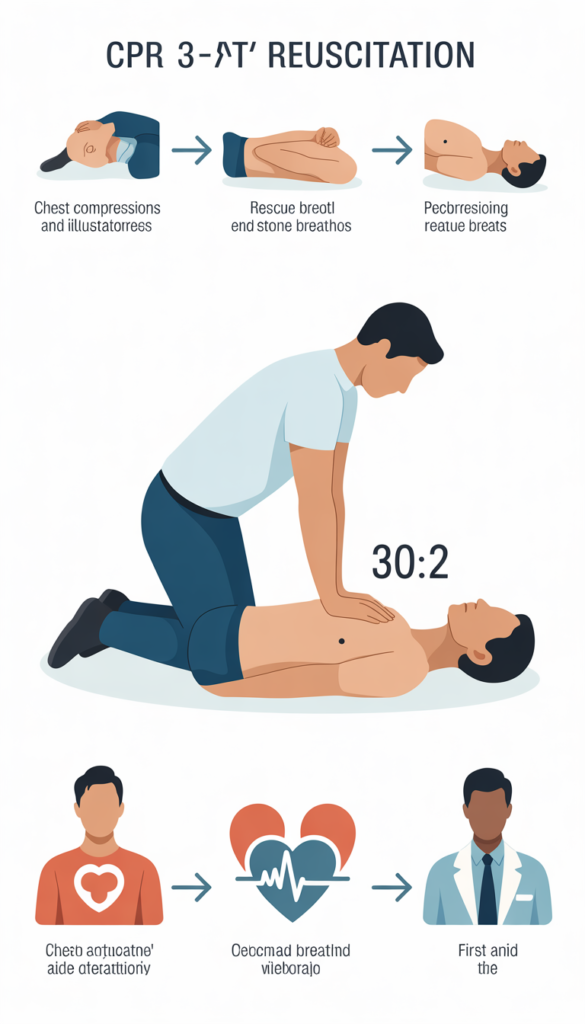
If the person is not breathing or has lost consciousness, call for help as soon as possible by dialling the emergency number 112 or 999, and then begin resuscitation. Place the victim on their back on a hard surface and begin chest compressions. Place one hand on top of the other in the centre of the chest, then perform rhythmic compressions to a depth of about 5–6 cm at a rate of approximately 100–120 compressions per minute.
After performing 30 chest compressions, give 2 rescue breaths. To do this, tilt the casualty’s head back, pinch their nose closed and give two gentle breaths into their mouth, checking that their chest rises. Then resume chest compressions. The cycle of 30 compressions and 2 rescue breaths should be repeated continuously until the emergency medical services arrive or the casualty starts breathing again.
If the rescuer is unable to perform rescue breaths or does not feel up to it, it is acceptable to perform chest compressions only. The most important thing is to start quickly and maintain a continuous rhythm of compressions. It is also worth, if possible, using an automated external defibrillator (AED), which is often found in public places and guides the user through the successive stages of providing assistance.
Knowledge of the principles of cardiopulmonary resuscitation (CPR) is extremely important, as it can save a person’s life. Regular first-aid training and access to a properly equipped first-aid kit increase your readiness to act in emergencies.
Wounds are one of the most common injuries encountered in everyday life. They can result from cuts, grazes, blows or contact with a sharp object. Depending on the type and depth of the skin damage, wounds can be classified as lacerations, puncture wounds, lacerations or superficial grazes, amongst others. Regardless of the type of injury, it is very important to administer first aid quickly and correctly to stop the bleeding, prevent infection and speed up the healing process.
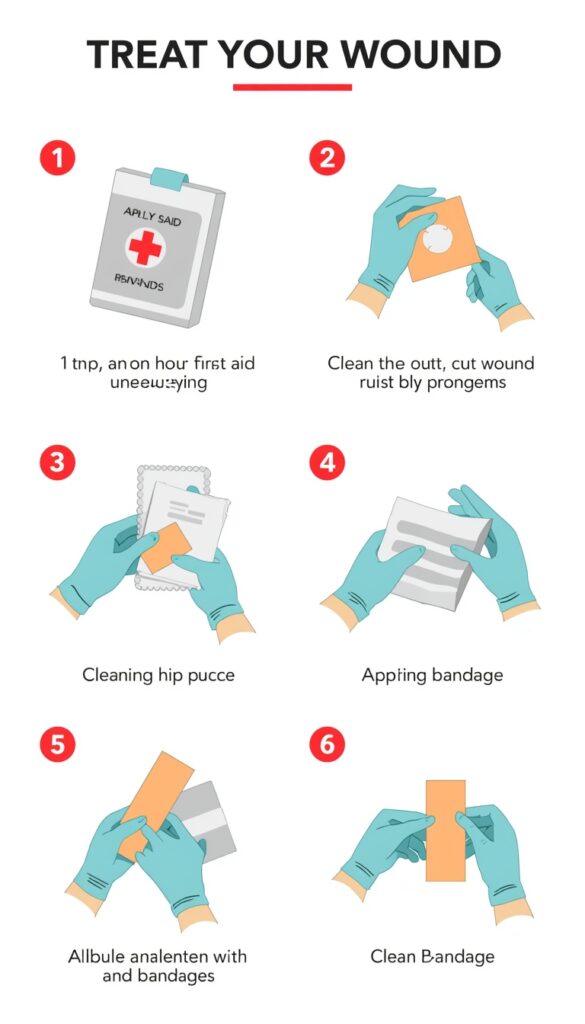
The first step when treating a wound is to ensure your own safety and, if possible, to use disposable gloves. Next, assess the condition of the injured person and, if necessary, call for medical assistance. For minor wounds, gently clean the area of the injury of any visible dirt, preferably using clean water or a disinfectant. The next step is to dry the skin around the wound and cover it with a sterile dressing, plaster or bandage.
If the wound is bleeding, apply a sterile dressing and apply gentle pressure to the bleeding area to stop the bleeding. In the case of larger wounds or heavy bleeding, it is necessary to apply a pressure dressing and seek medical assistance as soon as possible. The dressing should be securely fastened, but not too tight, so as not to restrict blood circulation.
A properly equipped first-aid kit allows you to respond quickly in the event of an injury. Every first-aid kit should contain, among other things, sterile dressings, bandages, plasters, gauze pads and disposable gloves. With the right dressing materials, it is possible to effectively protect the wound until professional medical help arrives.
Haemorrhage is a condition characterised by significant blood loss resulting from damage to blood vessels. It can occur as a result of a cut, physical trauma or a serious accident. Depending on the location, haemorrhages are classified as external, visible on the body’s surface, and internal, which occur inside the body and may be more difficult to detect. A swift and correct response from the first aider is crucial for limiting blood loss and protecting the casualty’s health.
In the case of external bleeding, the most important thing is to stop the bleeding as quickly as possible. Apply a sterile dressing, gauze or clean material to the wound and apply firm pressure to the bleeding site. If possible, raise the injured limb above heart level, as this may help reduce the intensity of the bleeding. If the dressing becomes saturated with blood, do not remove it, but apply another dressing and continue applying pressure.
In the event of severe bleeding or if the bleeding does not stop, you should immediately call for medical assistance by dialling the emergency number 112 or 999. The casualty should remain lying down, and the person providing assistance should keep a constant watch on their condition. It is also important to protect the casualty from hypothermia and to keep them calm until the emergency services arrive.
A well-stocked first-aid kit allows you to respond quickly in the event of bleeding. The kit should contain, among other things, sterile dressings, bandages, gauze pads and disposable gloves. These enable you to effectively dress the wound and limit blood loss until professional medical help arrives.

A fracture is a break in the continuity of a bone caused by an injury, a fall or a strong impact. It can affect both long and short bones, and its symptoms include severe pain, swelling, deformity of the limb, difficulty moving, and sometimes bleeding at the site of the injury. A quick and correct response from the first aider is crucial to reduce the victim’s pain, minimise the risk of complications and secure the injury site until professional medical help arrives.
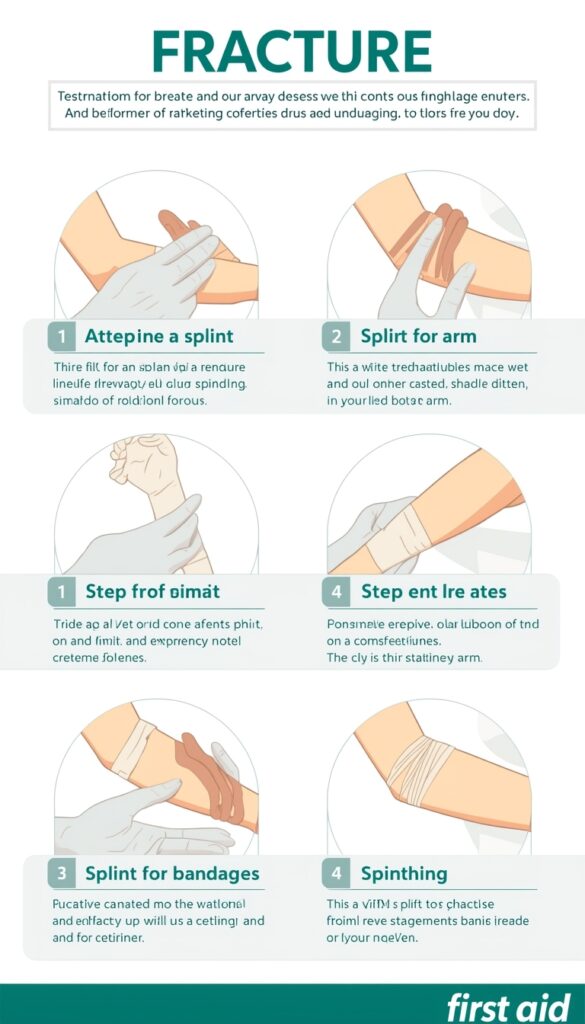
If a fracture is suspected, the injured limb must be immobilised. This is best done using a splint or a stable object (e.g. a board, cardboard) that immobilises the joint above and below the fracture. If a splint cannot be used, the limb can be gently held in its current position, avoiding any additional movements that could aggravate the injury.
An important part of providing first aid for a fracture is also checking the circulation, sensation and colour of the fingers on the immobilised limb. In the event of heavy bleeding, it must be stopped, and the injured person should be placed in a comfortable, safe position. Do not attempt to set a broken bone yourself – doing so may lead to serious complications.
A properly equipped first-aid kit increases the effectiveness of your response in emergencies. It is advisable for it to contain, amongst other things, bandages, gauze, disposable gloves and a splint or material that can serve as one. This makes it possible to secure the fracture quickly and safely until the arrival of the emergency services or the provision of professional medical assistance.